Bhutan
The last Himalayan Buddhist kingdom, governed by Gross National Happiness, carbon negative, and unlike anywhere else on earth.
Bhutan is the only country in the world that measures its progress by Gross National Happiness rather than economic output alone. It is also carbon negative, absorbing more than it emits, with over seventy percent forest cover written into its constitution.
These are not marketing lines. They are constitutional commitments, and they shape what it feels like to travel here, a country that decided deliberately what it wanted to keep.
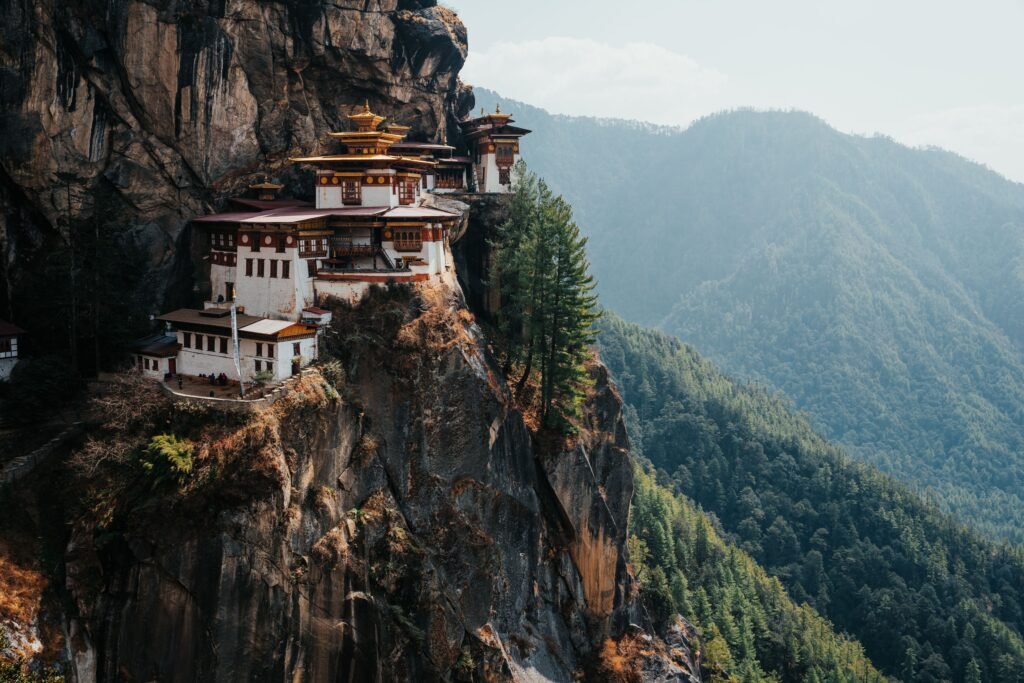
Because Bhutan never became a colony, its Buddhist culture was never interrupted. The dzongs are not museums; they still house monastic bodies and district government. The festivals are not performances; they are religious obligations that visitors happen to be permitted to attend.
The result is a rare thing: a living Himalayan Buddhist society, not a preserved one.
Bhutanese Buddhism belongs to the Vajrayana tradition, sharing its lineage with Tibet and Ladakh. Monastic robes here are deep maroon rather than saffron, and Guru Rinpoche, who brought Buddhism across the Himalaya in the eighth century, is the central figure of the festival calendar.
National dress, the gho and kira, is still worn daily in official settings, and traditional architecture remains a legal requirement for new buildings.
Unified in the seventeenth century by Zhabdrung Ngawang Namgyal, who built the network of dzongs that still define the valleys. A hereditary monarchy was established in 1907. In 2008 the fourth king voluntarily abdicated and introduced parliamentary democracy, an unusual sequence, in which the monarchy pressed for its own constitutional limits.
Spring, March to May, brings rhododendron and the major western festivals. Autumn, September to November, offers the clearest mountain views. Winter is cold but bright and quiet, with excellent Himalayan visibility. The summer monsoon, June to August, is green, wet and largely empty of visitors.
All international flights arrive at Paro, reached from Delhi, Kathmandu, Bangkok, Singapore and Dhaka. The approach is flown by sight rather than instrument and is among the most dramatic descents in commercial aviation. Internal travel is by road, on winding mountain highways where distances are measured in hours rather than kilometres.
Most nationalities require a visa, arranged in advance through a licensed Bhutanese operator. We prepare and submit the application and all supporting documentation on your behalf, and keep you informed at each stage. Approval is issued by the Department of Immigration.
A Sustainable Development Fee applies per person per night and funds free healthcare, education and conservation.
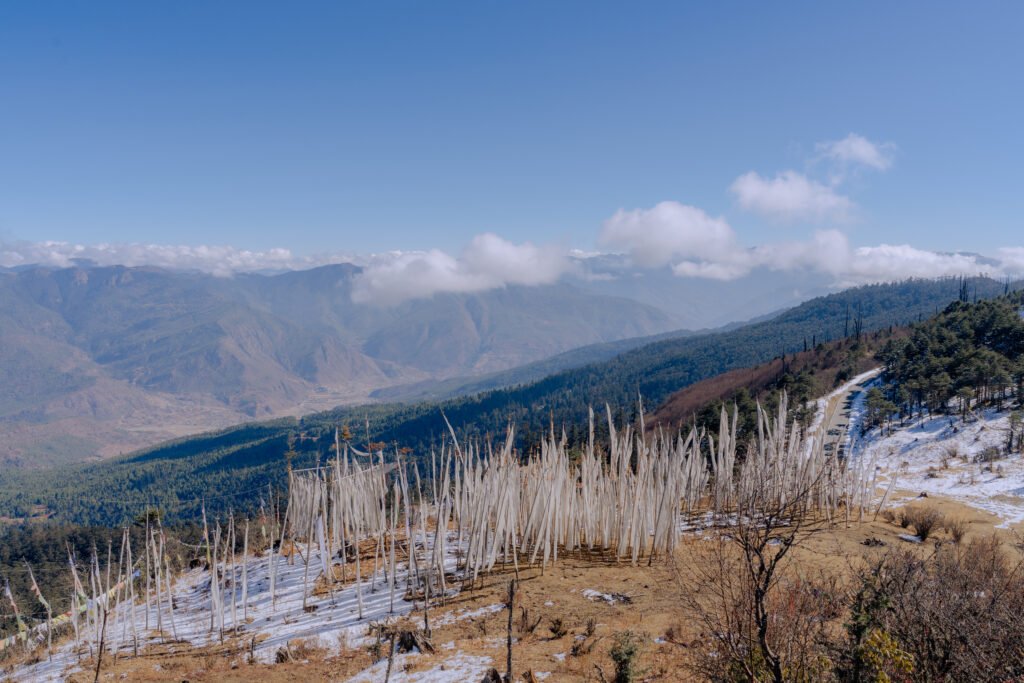
Journeys are private, with your own guide and vehicle throughout. Altitudes range from 1,200 metres in Punakha to nearly 4,000 at Chele La. Payment is arranged in advance through the licensed operator system. There is no need to carry large sums.
Seven routes.

Discover the Soul of Bhutan
Five days through western Bhutan, the shortest route that still reaches the heart.
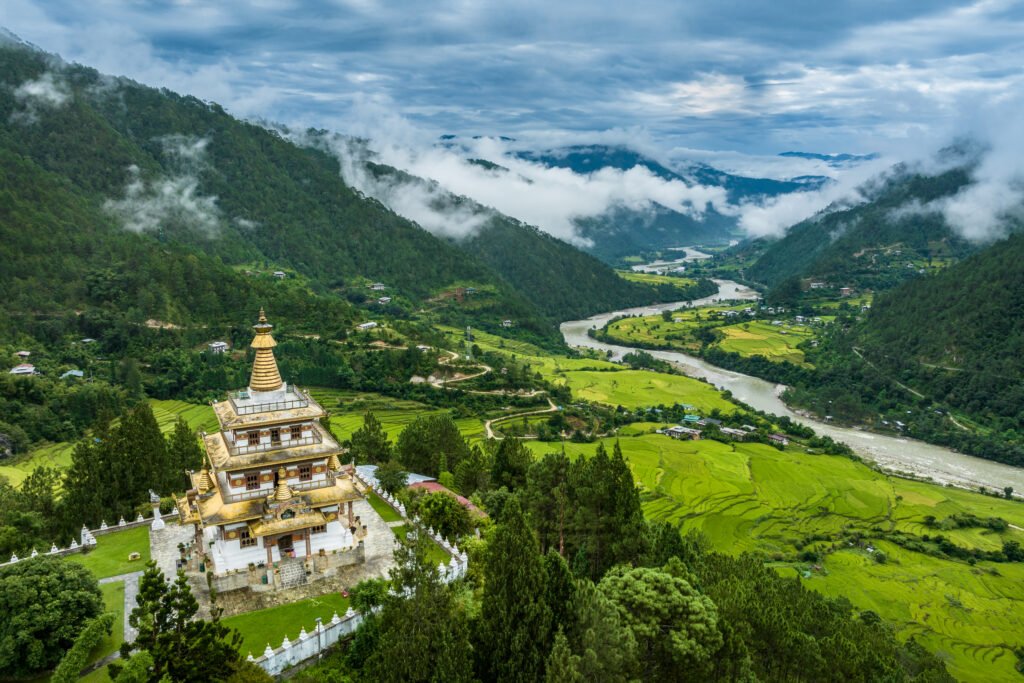
Bhutan at a Glance
Seven days across the three western valleys, unhurried enough to be worth doing.
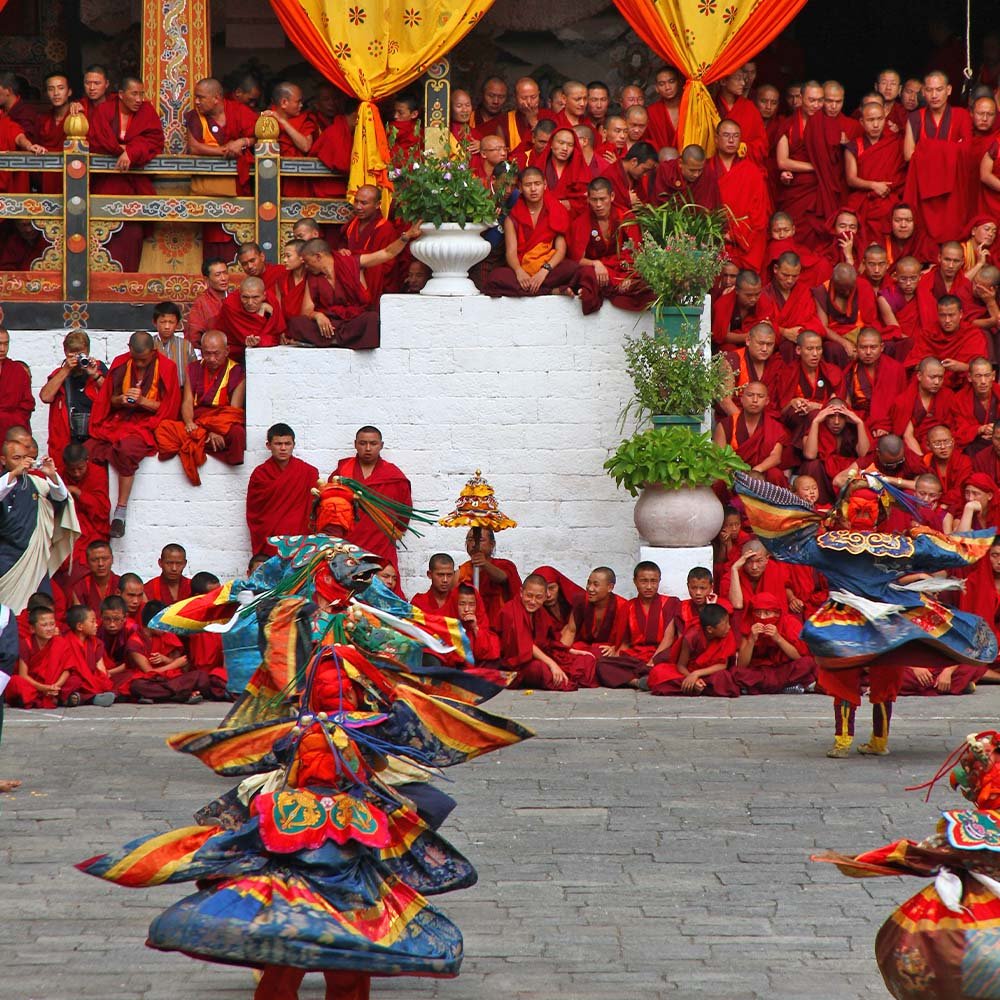
Punakha Tshechu
Sacred masked dance in the courtyard of a white fortress between two rivers.
Chele La Trek
Five nights under canvas through highland pasture above Paro.
Start with what draws you.
Tell us the season and what you want to understand. We will shape the route around it.
Design Your Journey→A boutique travel company creating private journeys through Bhutan, Ladakh and Darjeeling.