How many days do you need in Bhutan?
Five, seven, eleven. Each length buys you something different, and the most common mistake is not choosing too few days but spreading them too thin.
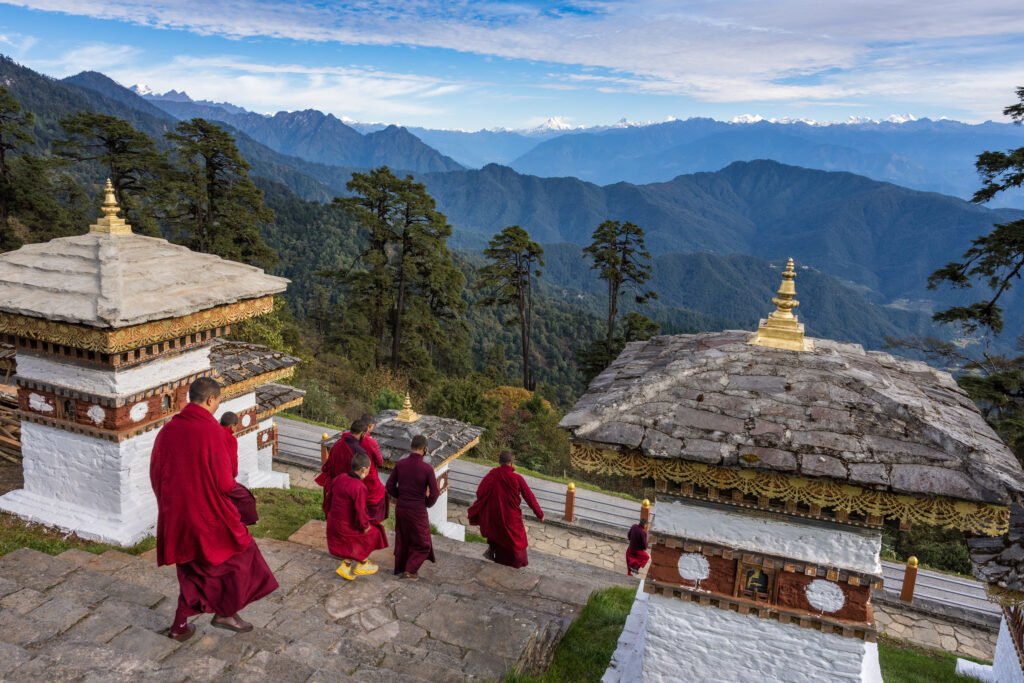
Bhutan is a small country that travels slowly. Distances look modest on a map and take three times longer than you expect, because the roads follow ridgelines rather than valleys. This is the single fact that should shape your planning.
Five days
Paro, Thimphu and Punakha. This is the shortest journey that reaches past the surface, and it works well if you are already in the region, arriving from Kathmandu, Delhi or Bangkok. You will cross Dochula, walk to Chimi Lhakhang through farmland, and climb to Tiger’s Nest. What you will not have is a spare day, which means weather has no room to go wrong.
Seven days
The same three valleys with breathing space, or the same route plus Haa over Chele La. Seven is where a journey stops feeling like a schedule. It is also the minimum we would suggest for a festival, because the Tshechu itself absorbs two of the days.
The commonest error is not booking too few days. It is booking eight and trying to see eleven days of country in them.
Ten to eleven days
Enough to go east. Over the Pele La into Phobjikha, on across the Yotong La into Bumthang, four valleys holding the oldest temples in the country. This leg involves two long driving days, and they are part of the experience rather than an interruption. A domestic flight back from Bumthang can return one of those days to you.
Two weeks and beyond
Trekking territory, or the east proper. Both reward the time, and neither should be attempted on a compressed schedule at altitude.
Book earlier than you think
For March to May and September to November, six to twelve months ahead is normal. Festival dates in particular fill early, because the valley has a fixed number of beds and everyone wants the same three nights.
Tell us how long you have.
We will tell you honestly what fits and what does not.
Design Your Journey→A boutique travel company creating private journeys through Bhutan, Ladakh and Darjeeling.