
The farmhouse and the hot stone bath
River stones heated in a fire until they crack, dropped into a wooden tub of water and artemisia. It is the oldest form of hospitality in Bhutan and the one most travellers remember.
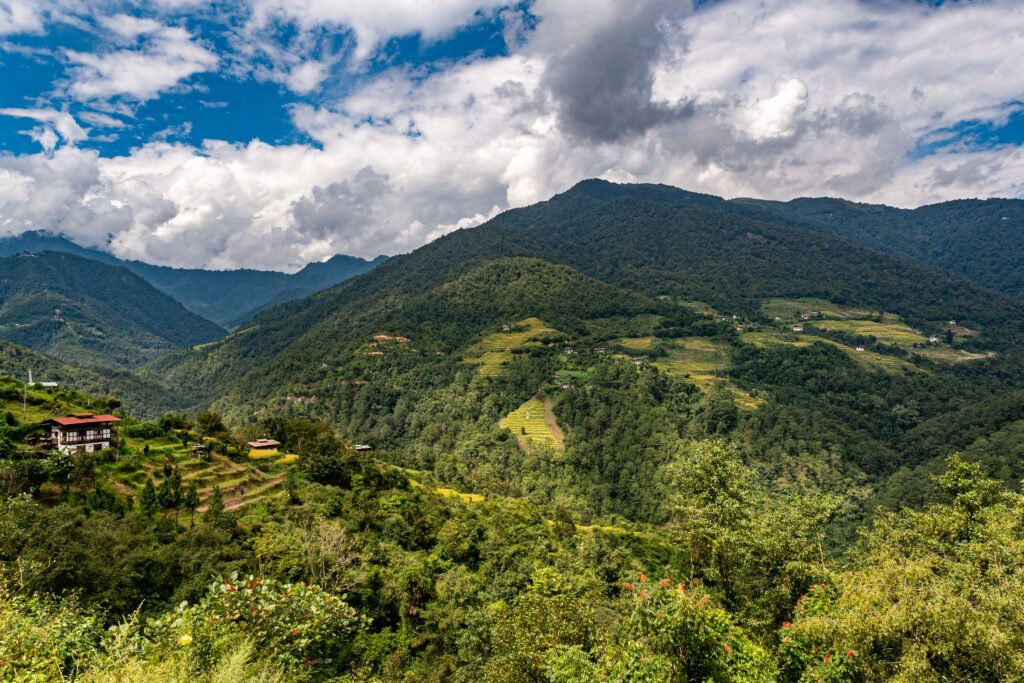
A traditional Bhutanese farmhouse is three storeys of rammed earth and timber, built without nails. Animals occupied the ground floor, the family the middle, and the top was left open for drying chillies. Which is why so many roofs are red in autumn.
Staying in one
Farmstays are simple. Bedding on the floor, a shared bathroom, food cooked over wood. What you get instead of comfort is the household: the altar room that every home has, the butter lamps lit at dusk, the family eating in the same room as you rather than serving you.
Comfort is easy to buy in Bhutan now. Proximity is not.
The hot stone bath
Menchu means medicinal water. River stones are heated in an open fire until they glow, then slid into a sealed compartment at one end of a wooden tub. The water hisses and heats from that end, and the minerals released from the cracking stone are what the bath is for. Artemisia leaves float on the surface.
It is used after harvest, after trekking, and for joint pain. It is not a spa treatment, though hotels now offer a version of it. In a farmhouse the fire is outside the wall and someone is tending it while you sit.
Where it fits in a journey
The right night for this is after the hardest walking day, after Tiger’s Nest, or coming off a trek. Ask for it a day ahead, because the fire takes hours.
What to know
The water gets very hot; move away from the stone end. It is customary to bathe in the evening. And unless you have asked otherwise, expect the family to keep you company outside afterwards, which is the actual point.
One night in a farmhouse.
We will arrange the bath and the family. Say the word.
Design Your Journey→A boutique travel company creating private journeys through Bhutan, Ladakh and Darjeeling.