Bumthang, the spiritual heartland
Four valleys in central Bhutan holding the oldest temples in the country. Most visitors never get here, which is both a shame and the reason it is worth the drive.
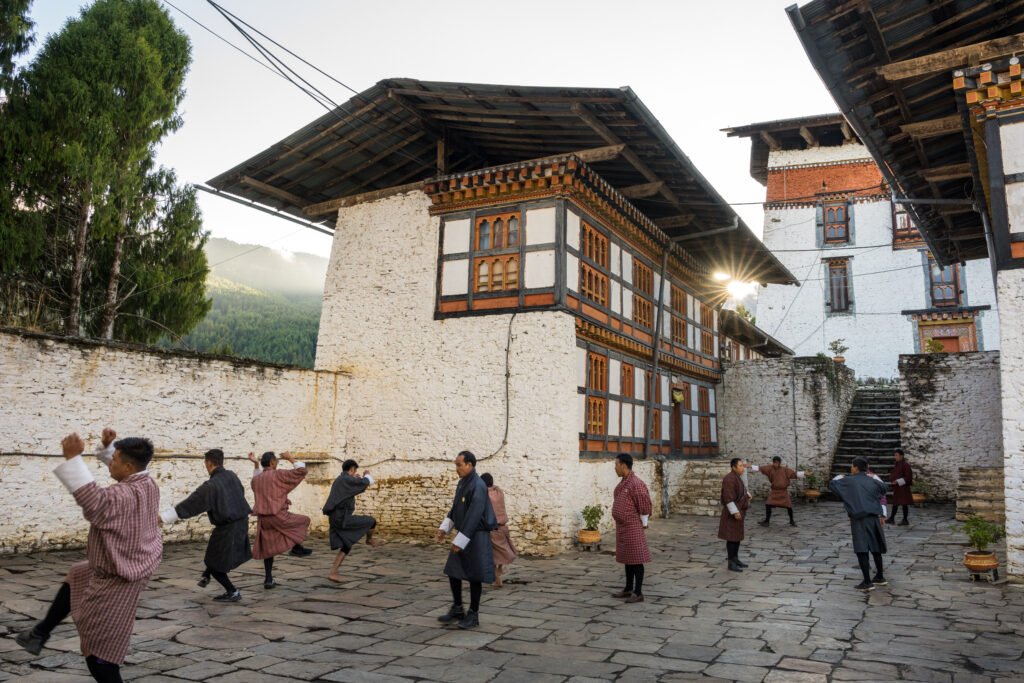
Bumthang is where Buddhism entered Bhutan. Not metaphorically. The temples here are the physical sites, and several are still standing in some form.
Jambay Lhakhang
Said to be one of 108 temples built in a single night in the seventh century by the Tibetan king Songtsen Gampo, to pin down a demoness lying across the Himalaya. Its autumn festival includes a fire ceremony and a naked dance performed at midnight, which is exactly as unusual as it sounds and is not staged for visitors.
Kurjey Lhakhang
Built around a cave containing what is held to be the body imprint of Guru Rinpoche, left when he meditated here in the eighth century. Three temples now stand in a row, the oldest from 1652.
You can see the whole of western Bhutan without once standing somewhere this old.
Tang and Ura
The outer valleys. Tang holds Mebar Tsho, the Burning Lake, where a treasure-revealer is said to have dived in holding a lamp and surfaced with it still lit. Ura is one of the highest villages in the country, clustered and cobbled, and feels closer to Tibet than to Thimphu.
The practical part
Bumthang is two long driving days from Paro, over the Pele La and the Yotong La. It is colder than the west in every season. There is a domestic airstrip, and flying one leg is worth considering, it returns two days to a journey.
Also: cheese and beer
A Swiss settler established a dairy and a brewery here in the 1970s. Both are still running, and the incongruity is part of the valley’s character.
Go further east.
Across the Kingdom takes eleven days and reaches Bumthang properly.
Design Your Journey→A boutique travel company creating private journeys through Bhutan, Ladakh and Darjeeling.