
Ladakh
Beyond the mountains, within yourself. Silence, ancient monasteries, and Himalayan landscapes that make time stop.
About Ladakh
The land of high passes and ancient dharma.
Ladakh sits at the edge of the Tibetan plateau in the Indian Himalayas — an austere, dramatic landscape of brown mountains, turquoise rivers and sky so blue it seems impossible. At altitudes between 3,000 and 5,000 metres, the air is thin, the light is extraordinary and the silence is absolute.
But Ladakh is not just landscape. It is one of the last surviving regions of Tibetan Buddhist culture — a place where ancient monasteries cling to clifftops, monks chant in candlelit halls and the old way of life continues, quietly and beautifully, in the shadow of the mountains.
We design tailor-made Ladakh journeys for travellers who want to go beyond Leh’s main drag and experience the monasteries, villages and valleys that most visitors never find.
What Ladakh offers
- Ancient Tibetan Buddhist monasteries (Hemis, Thiksey, Lamayuru, Diskit)
- High altitude lakes: Pangong Tso, Tso Moriri, Tso Kar
- Dramatic mountain passes including Khardung La and Chang La
- Traditional Ladakhi villages and homestay culture
- Hemis Festival — Ladakh’s most important masked dance festival
- Trekking from Markha Valley to Zanskar
- The Indus Valley and its ancient rock carvings
Best time to visit
Summer (June–September): The main travel season. Roads open, lakes accessible, festivals active. Warm days, cold nights at altitude.
Winter (November–February): The Chadar frozen river trek. Extreme cold but extraordinary solitude and crystal-clear skies.
Plan Your Ladakh Journey
Every Ladakh journey we design is entirely private and bespoke. Tell us when you want to travel and what matters most — we’ll do the rest.
Ladakh
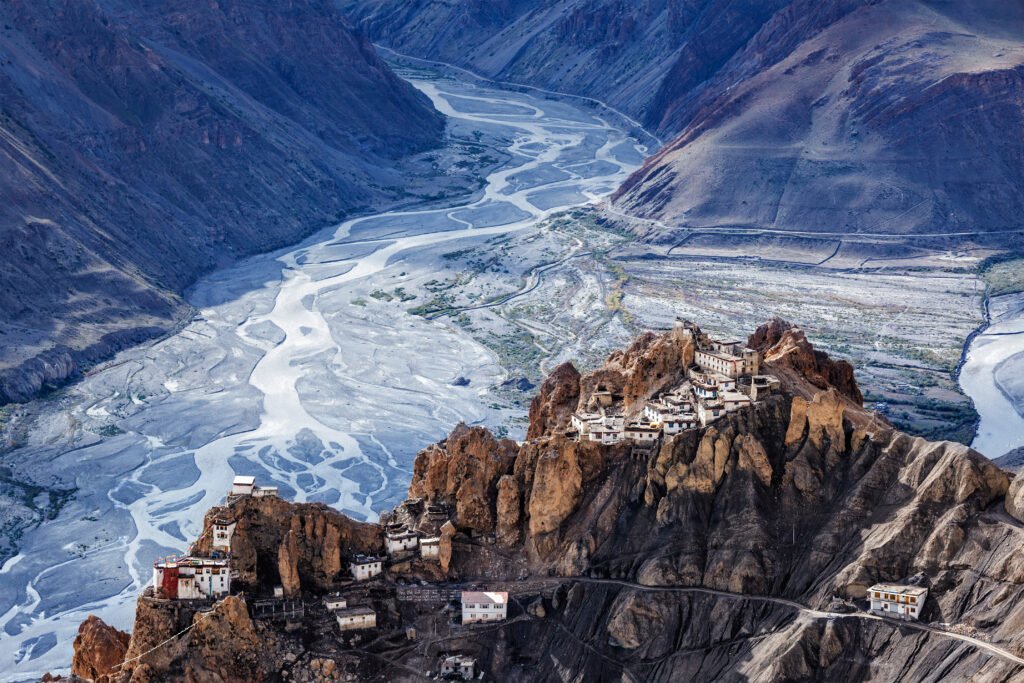
Ladakh — Beyond the mountains, within yourself.
High in the rain-shadow of the Himalaya lies Ladakh, a land where time seems to slow and silence speaks louder than words. Here, the mountains rise like ancient guardians, their colours shifting with the light—from soft gold at dawn to deep crimson at sunset. Every moment feels rare and unrepeatable, as if the landscape itself is inviting you to pause, breathe, and truly see.
At first glance, Ladakh appears stark and unforgiving—vast plains, rugged rock, endless sky. Yet those who linger discover its hidden tenderness. Deep within narrow valleys, emerald fields and poplar-lined villages emerge like quiet miracles. Life flows gently here. People welcome travellers not as strangers, but as guests, sharing stories, butter tea, and a way of life shaped by respect for nature’s power and rhythm.
Beyond the valleys stretches the immense Changtang Plateau, one of the highest inhabited regions on earth. Nomads move across this boundless land with their yaks and Pashmina goats, following paths traced by generations before them. The wind carries echoes of an ancient past—of caravans, prayers, and trade routes that once connected Ladakh with Tibet, carrying not only goods, but ideas, beliefs, and art.
That spiritual heritage still lives on in Ladakh’s monasteries, perched dramatically on cliffs and hilltops. In the remote valleys of Zanskar, prayer flags flutter above timeless villages, and the sound of chanting drifts through the thin mountain air. Here, Tibetan Buddhism blends with older Bon traditions and nature beliefs, creating a spiritual landscape as layered and profound as the mountains themselves.
To walk through Ladakh—whether on a quiet village path or a high mountain trail—is to step into a world largely untouched by modern haste. It is a journey inward as much as outward, where vast spaces invite reflection and simplicity brings clarity. Ladakh does not overwhelm; it unfolds slowly, revealing its depth to those who approach with openness and respect.
This is the essence of Ladakh: raw yet gentle, remote yet deeply human. A place that stays with you long after you leave, not as a memory of sights alone, but as a feeling—of stillness, connection, and timeless wonder at the heart of the Himalaya.